


The Why
"The scenery and sheer magnitude of the race is amazing. It's streamed live on YouTube, and there are over 2,000 riders. It's a race for professionals and amateurs. But everyone must have the ambition to go out and conquer."
In 87 days, mountain bikers from around the world will descend upon the Western Cape of South Africa for the 2024 Absa Cape Epic.
Known as the Tour de France of mountain biking, the Cape Epic is the world's most distinguished mountain bike race.
It's also the most brutal. Over eight days and seven stages, teams will put their skills and resolve to the test.
Once it's all said and done, riders will cover 300 miles and climb over 55,000ft. Taking on the Cape Epic demands three things.
First, you must be willing to suffer. Those who endure conquer. Second, you must keep a clear head. Your mind must withstand eight days of punishing terrain. Third, and most critical, your spirit cannot waver.
If your spirit breaks, no amount of physical prowess or mental fortitude will see you across the finish line. You can shore up the first two yourself, but the third requires outside help. And that's why a big piece of the Cape Epic is the team element.
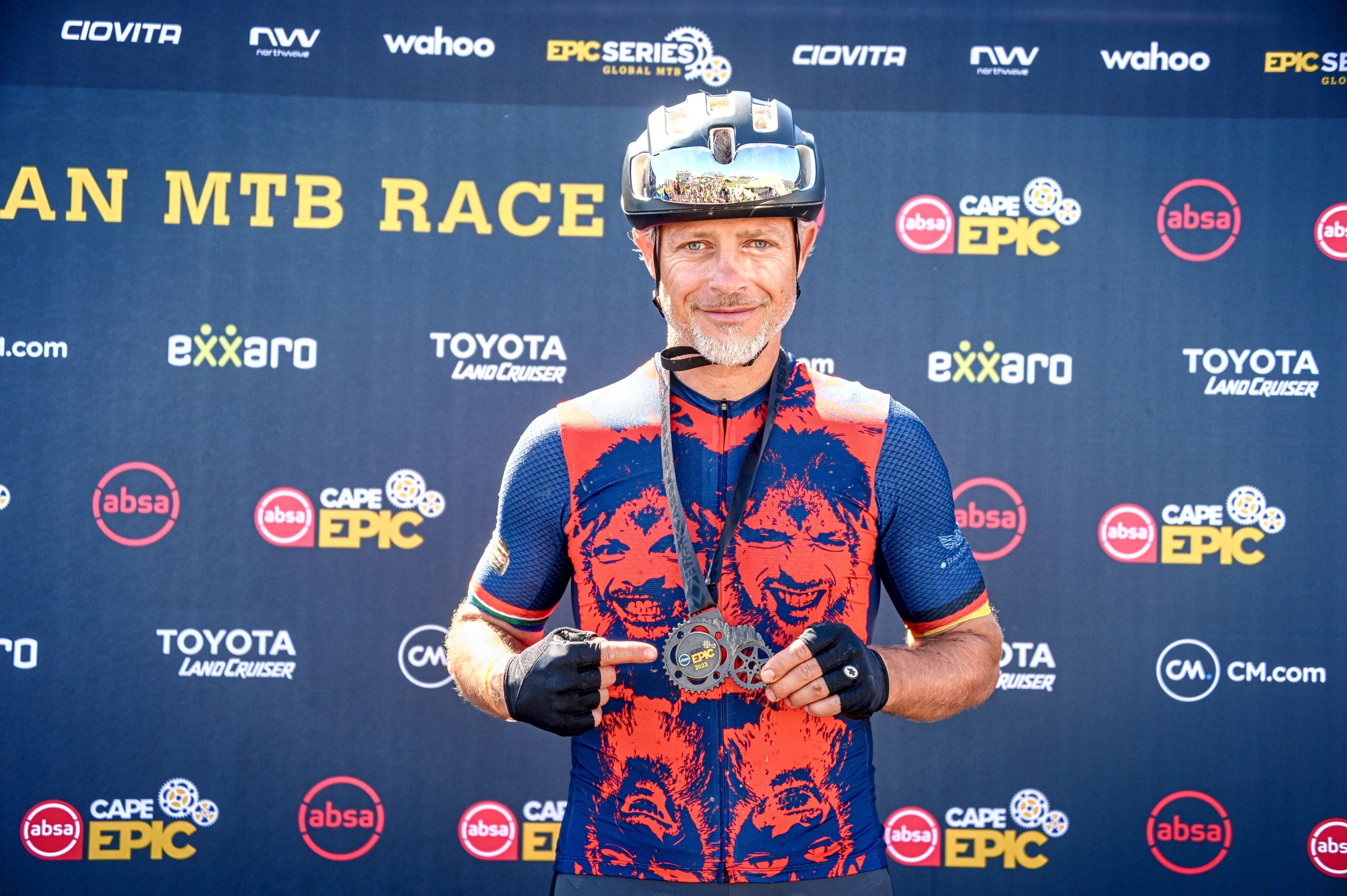
"It's the most prestigious. The most desirable. The most famous mountain bike stage race in the world," says Daniel Hannich. "The scenery and sheer magnitude of the race is amazing. It's streamed live on YouTube, and there are over 2,000 riders. It's a race for professionals and amateurs. But everyone must have the ambition to go out and conquer."
The stage race begins in the rural town of Tulbagh. A Dutch settlement town in the 1700s, Tulbaugh is now a staple among Western Cape's Winelands.
Stage 1 doesn’t waste any time. Covering 56 miles of punishing ground, riders experience 8,038ft of climbing before ripping down hand-built single tracks never ridden before in a race.
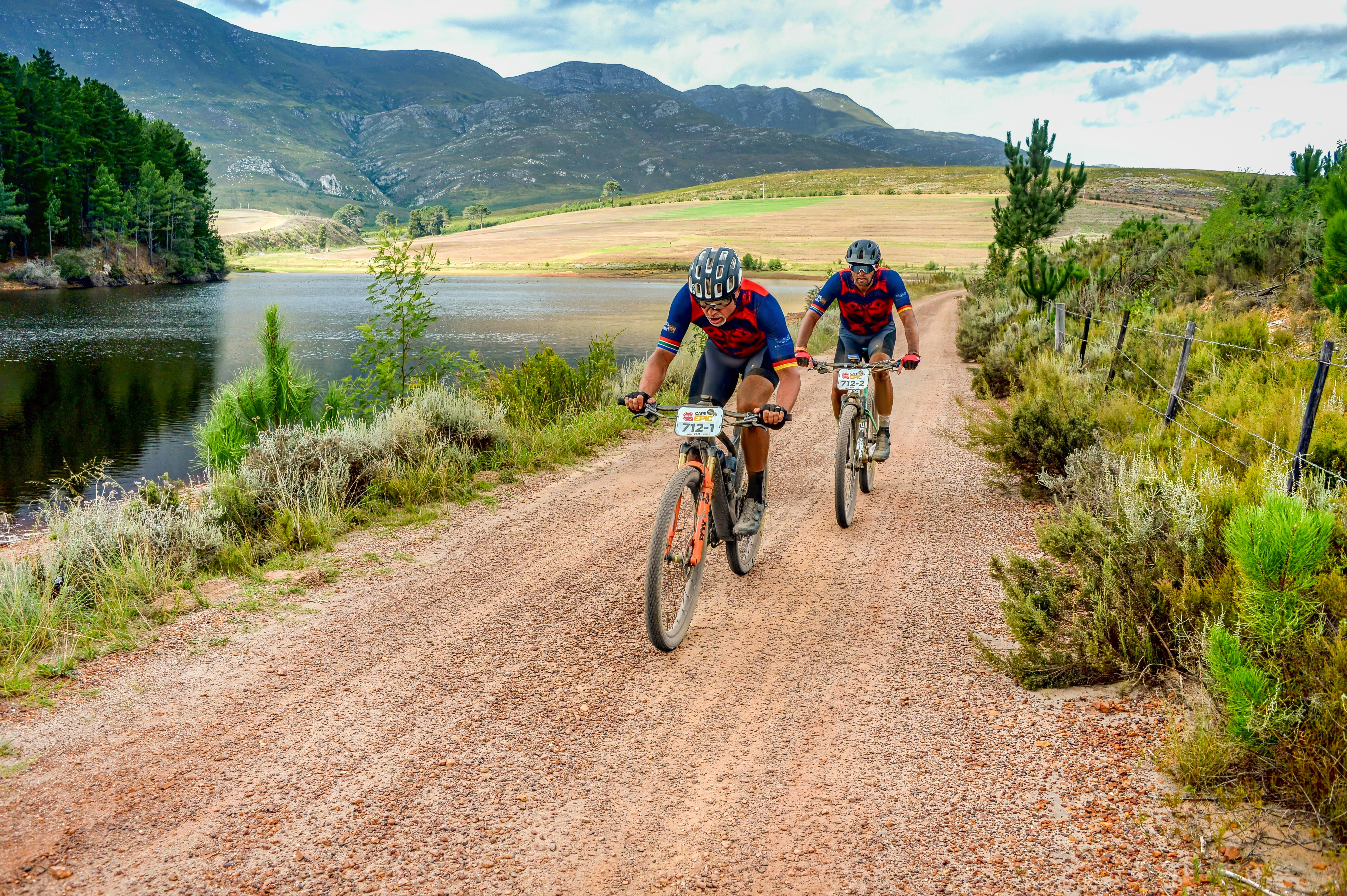
In stage 2, riders square off against the Witzenberg Valley. Willpower is on display for 58 miles as athletes cross some of South Africa's most technical terrain.
Conquering stage 2 demands you are firm in your resolve. Climbing over 7,218ft shocks the system and dulls the mind.
You must also maintain clarity. The downhill single track is dotted with hairpin turns and denies all momentum. Those who pick their lines well win the day.
"Mountain biking requires incredible focus for long periods over tough terrain. This mental component makes it a bit different than road racing," says Daniel.
Some refer to the Absa Cape Epic as the "race that measures all." It's an appropriate moniker. You aren't so much competing against the other riders as you are against Africa's untamed landscape.
Stage 3 epitomizes this notion. As the only transition stage, riders depart for Wellington. Situated at the base of one of the oldest mountains in South Africa, Wellington is the epicenter of the Cape Winelands.
Stretching 58 miles with almost 7,000ft of climbing, unrelenting terrain marks stage 3. The trip to Wellington sends riders into the wild.
"You must be physically strong and ready to race. But you must also have a lot of resilience and mental toughness for stage races," says Daniel.
The Absa Cape Epic demands the best of you and won't settle for anything less. With 55 miles and almost 10,000ft of climbing, Stage 4's task is simple: cull the herd.
Ascents mark stage 4, each becoming longer and steeper as the day progresses. The day culminates in the most technical cliffhanger of the Series. Riders experience a 3,200ft drop down the Hawequa mountainside.
Your reward for surviving Stage 4 is a thrilling loop through the wild boar trails of the Doolhof Valley. The excitement is short-lived, though.
Stage 5 has teams competing against the wild countryside of Stellenbosch. Beautiful vineyards dot the landscape, but an unforgiving terrain lies beneath the manicured rows of grapes.
With five days of hard riding behind you, fatigue sets in. Mental lapses become more frequent. Your bike becomes heavier. The landscape more punishing.
The relentlessness of it all chips away at you. One mistake is all it takes to break your spirit. Missteps aren't allowed on stage 6.
With 54 miles and 7,500ft of climbing, stage 6 aims to do one thing: break you. Only those willing to step beyond the edges of their capacity are allowed here.
With the end in sight, stage 7 pits riders against the Jonkershoek Valley. Covering 40 miles with over 6,500ft of climbing, athletes scale the Valley's wall three times and descend twice. The final leg is a 1,000ft downhill sprint to the finish.
"My partner crashed out on the sixth day, so I had to finish the race alone," says Daniel. "The penultimate day saw the most rain in South Africa's history. And since I was riding solo, I had to start behind the pack, which made the trails worse. My bike was caked with mud. It was the hardest day of racing I've ever done, but I was extremely happy and filled with gratitude."
The Training
They say slow is smooth, and smooth is fast. This is a reminder to act deliberately and with intention. Because sometimes, the quickest route isn't the most efficient. If you want to go far, you must go slow.
Focus = Zone 2
Daniel's coach emphasizes zone 2, which keeps your heart rate between 60 and 70 percent of its maximum. Training in this zone makes oxygen the primary driver of energy production. Doing so increases your aerobic capacity.
"By focusing on zone 2 training, I got stronger as the event went on," says Daniel. "We dialed in my base mileage, and the zone 2 training got me in top shape. Afterward, I cycled around Cape Town a few extra days because I felt good."
Prioritize your rest days
Another benefit of zone 2 training is that you don't beat your body into submission. You can recover and hit another training session even after long days in the saddle. But you still need to rest.
Daniel worked with a coach who helped monitor his rest and recovery, ensuring he took days off when necessary.
The Food
Mountain biking differs from road racing in that the terrain plays a much more active role. The mountains don’t always allow for drafting or coasting. The continuous climbing denies all momentum. The downhill is filled with rocks, boulders, and exposed roots. Opportunities to grab food are limited, making a food strategy critical.
Every hour on the hour
Daniel consumed between 90 to 120g of carbs every hour. He had a timer to remind him when it was time to eat to ensure he met this goal.
Balancing act
Most of Daniel’s carbs were in liquid form. He carried a few bars, but every gram you carry weighs you down. So, it’s a balance between foods that pack a punch and aren’t bulky.
The Gear
The Absa Cape Epic only permits you and your teammate to work on your bikes. There are aid stations throughout the course, but outside assistance isn’t allowed. So, teamwork and bike maintenance become critical.
Daniel’s gear kit
Bike pump
At least two extra tubes per bike
Toolbox
Chain repair
Tire repair kit
Two Co2 canisters
Pro tip
Opt for a full-suspension cross-country bike. Mountain bike races are tough physically, but they’re also tough on the machinery. These bikes are light, durable, and able to withstand multiple days of hard riding.
Lessons learned
Daniel, on the value of training like you compete
“You want to have that experience beforehand. That way, you know how to handle things when shit goes wrong.”
My $0.02
Running a marathon is hard.
Cycling 100 miles is hard.
Swimming in open water for 3 miles is hard.
Climbing a 15,000ft mountain is hard.
But running 1 mile is doable.
Cycling for 30 minutes isn’t bad.
Swimming 100 yards is light work.
Making it to base camp is part of the job.
By breaking down larger goals into manageable chunks, you create milestones.
These small wins will compound, giving you momentum.
Stack enough of these small wins on top of one another, and what once was hell no becomes hell yeah!